NASCAR 26 Darlington Driving Guide
Driving Darlington in NASCAR 26 is unlike any other track in the game. There is braking, shifting, and constant steering compared to a superspeedway, and every lap asks for precision. What there is: the wall, the tire wear, and the constant calculation of where to be and when to lift.
Also See: NASCAR 26 Darlington Strategy Guide | NASCAR 26 Darlington Setup Guide (AMS)
The Basics: Brake, Turn, and Roll the Center
At Darlington you brake for both ends of the track, and you brake in a straight line. Get your braking done before you turn in, then roll the center of the corner with the car settled. If you brake while turning, the car pushes up toward the wall, and at Darlington there is no runoff to save you. Your steering inputs should be small and smooth: a little left through the turns, a little right on the straights, and nothing sudden anywhere.
Cup cars at Darlington need the most care. They have the power to spin the rear tires on exit and the speed to reach the wall in a hurry. Trucks and ARCA cars are slightly different. They have less power and less grip, so the car slides more and the wall feels even closer. The driving approach is the same in every series: brake early, turn once, and be patient with the throttle.
The Racing Line
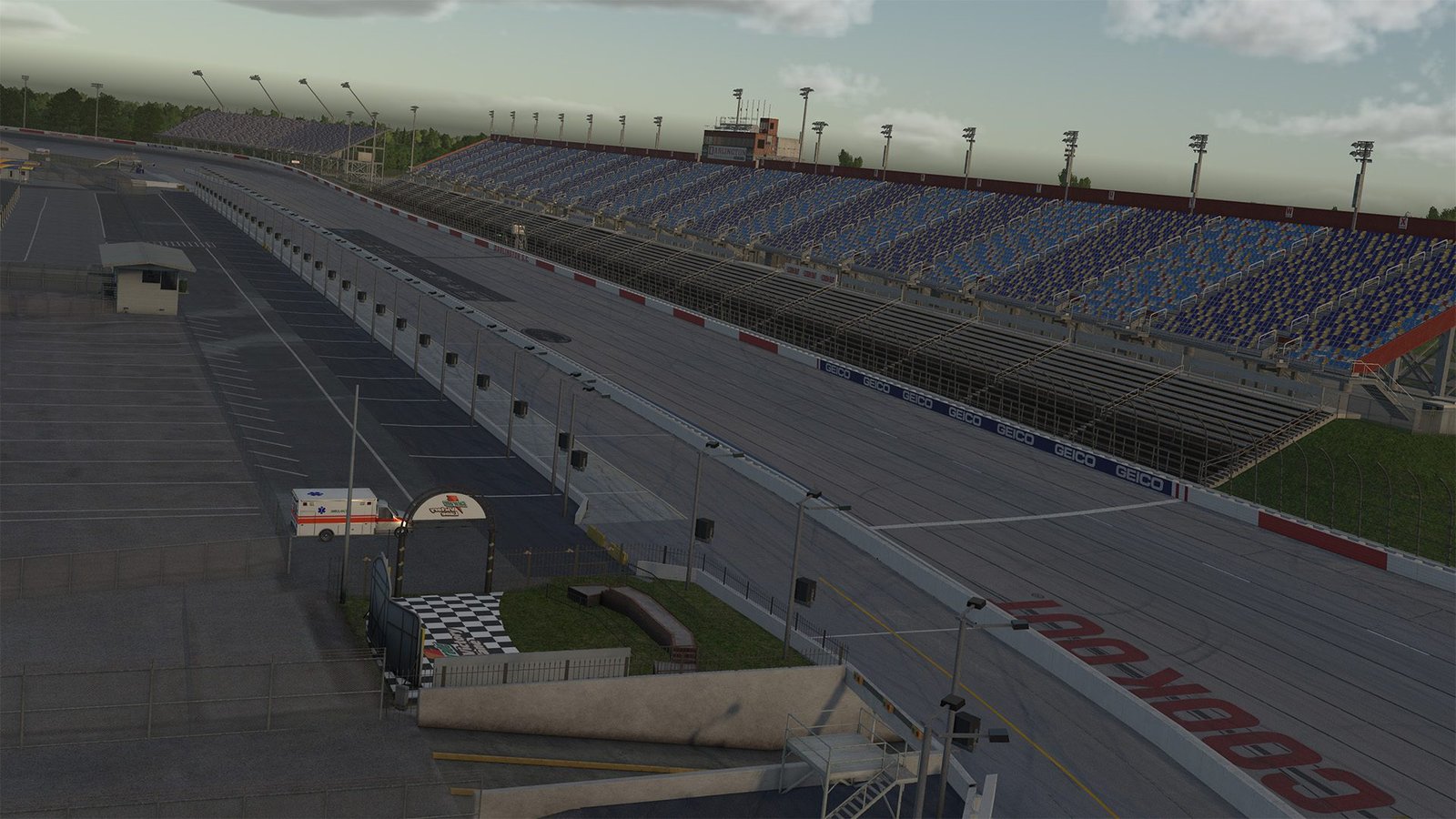
The fastest line at Darlington is the top, inches from the outside wall. Run it in both ends and you will be quick. The two ends ask for different entries, though. Turns 1 and 2 are tighter and more banked, so enter lower, get the car turned early, and let the banking carry you up to the wall. Turns 3 and 4 are wider and flatter, so you can carry more speed in, but the car wants to wash up the track on exit, so leave a margin.
Top line: Fastest over a run, closest to the wall, and the line the leaders use. Learn it in practice before you need it in a race.
Middle line: The compromise. Slower than the top but safer when your tires are worn or when traffic crowds you.
Bottom line: Shortest distance, but the slowest way around Darlington. Use it to defend a position or to pass a car that is struggling, not as your main line.
The fast line changes as your tires wear. Early in a run, the top is comfortable. Late in a run, the car slides up toward the wall on its own, so you may need to start lower and give yourself room.
Throttle Control and Tire Wear
Your right foot is your tire management tool at Darlington. The abrasive asphalt wears the rear tires fast, and every time you spin them on exit you pay for it for the rest of the run. Roll into the throttle, short-shift out of the turns, and keep the car straight before you ask for full power. If the car starts to slide, lift a little and let it settle rather than fighting it with steering.
Watch the falloff. A car that is fast for five laps and sliding by lap 20 is a car that was driven too hard early. The drivers who win at Darlington are the ones whose tires are still working at the end of a run.
Passing at Darlington
Passing at Darlington is a setup, not a lunge. Set a pass up over several laps: pressure the car ahead, make it use its tires defending, and take the position when it starts to slide. The best passing zone is into Turns 1 and 2, where the tighter end rewards a clean entry. Do not force a pass in Turns 3 and 4. The wide, flat end leaves no room for two cars that both want the wall, and the car on the outside usually ends up in it.
Your job when being passed: give room. A car alongside you through the turns will push you toward the wall. Lift early, let it go, and take the position back later when its tires are gone.
Avoiding the Wall
You cannot avoid every brush with the wall at Darlington, but you can avoid most of them.
- Brake early for Turns 1 and 2. The tighter end catches drivers who carry too much speed in.
- Do not run side by side through the turns if you can help it. The outside car always runs out of room.
- Have an escape plan. Always know which way you will go if the car ahead gets loose: inside or outside, and what you will do if the wall is on that side.
- Do not overcorrect. When the car gets loose, small corrections. Big steering inputs at Darlington end at the wall.
Practice Drill
Run 20 laps in practice with one goal: stay within one car length of the wall through both turns without touching it, and keep your lap times within a few tenths of each other. If you can do that, your tires are alive and your line is right. Then run a full fuel stint and watch how much the car moves as the tires wear. That is the Darlington lesson, and it is worth learning before the race starts.