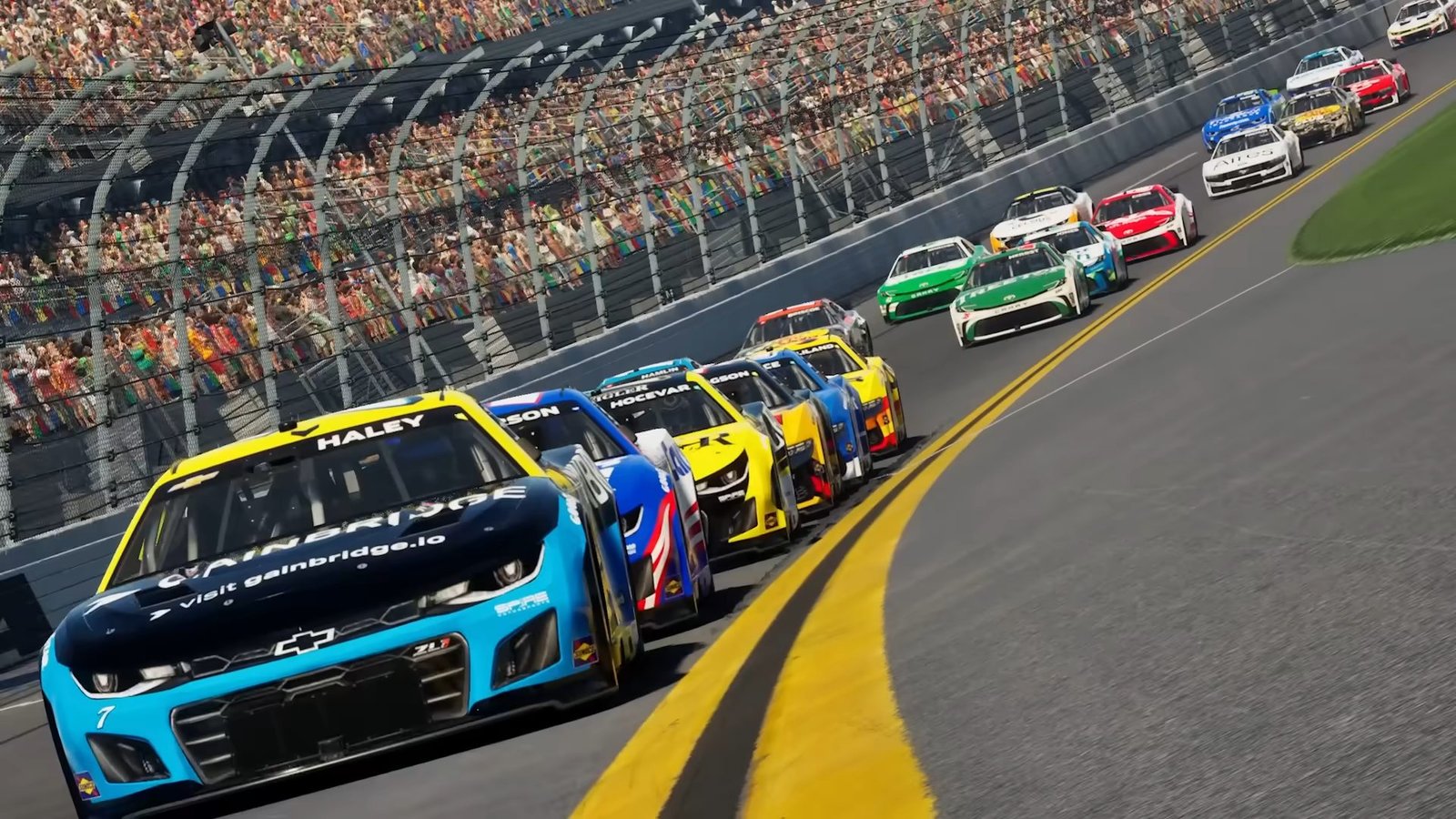
NASCAR 25 Daytona Strategy: How to Win the 500
NASCAR 25 Daytona strategy is what separates the players who survive from the players who win. Pace barely matters here, so races come down to fuel, track position, and being in the right place when the white flag flies. Whether you are running a quick online sprint or the full Daytona 500, the plan changes with the distance. Here is how to think about it.
Also see:
➡️ Daytona track overview
➡️ Daytona survival tips
➡️ Daytona driving guide
Short Sprints and Online Races
In a short race with no pit stops, qualifying and survival are everything. You do not have time to recover from a lap down, so a clean start matters more than anything. Because the run is short, most players push too early and take each other out.
Your plan here is simple. Ride near the front but out of the very first row, stay clean through the middle, and save your best move for the closing laps. As a result, you are still running when the aggressive drivers have wrecked out.
Long Races and Fuel Mileage
The Daytona 500 runs 200 laps and 500 miles, and fuel becomes a real factor. Green-flag stops cycle the field, and timing yours well can jump you a dozen spots. However, pit at the wrong moment and you can come out a lap down or stuck alone with no draft.
Try to pit with a group so you have help drafting back up to the pack. Meanwhile, keep an eye on your fuel window late, since a race that comes down to mileage can hand the win to whoever stretches it best.
Tires and Track Position
Tires wear slowly at Daytona because you are not sliding the car through corners. Therefore, track position almost always beats fresh rubber here. Taking two tires, or even none, to get out ahead of the field is often the smart call on a late stop.
Weigh it against your fuel needs, though. If you have to stop for fuel anyway, you might as well take tires. The key is to think about where you come out in the running order, not just how the car feels.
Pitting Under Green vs Yellow
Cautions are gold at Daytona, since a yellow-flag stop costs you far less track position than a green one. If you can wait for a caution to pit, you usually should. Because the Big One brings out yellows often, patience frequently pays.
That said, do not gamble yourself out of the race. If you are close to running out of fuel, take the green-flag stop rather than hoping for a caution that may not come. A safe lap down beats parking it on the backstretch.
Starting Deep in the Field
Starting deep in the field is not the death sentence it is at other tracks. Since the pack runs together, you can move from 30th to the top ten in a few laps just by riding the right lane. Do not panic and do not force it early.
An off-sequence strategy can also work in a long race. Pit a little earlier or later than the leaders, and a well-timed caution can cycle you to the front. Combine that with clean driving and attrition, and a bad starting spot turns into a real shot at the win.
Timing Your Run to the Front
The finish at Daytona is all about timing. Show your hand too early and the field will draft right back past you before the line. Consequently, the winning move usually comes on the final lap, or even the final corner.
Hang back a car length, build your run through the tri-oval, and time your pull so you clear the leader right at the stripe. Bring a drafting partner with you if you can, because two cars working together will always beat one. Watch this NASCAR 25 career Daytona 500 with pit strategy to see exactly how late-race positioning and pit timing play out. Get that timing right and you win the Great American Race.