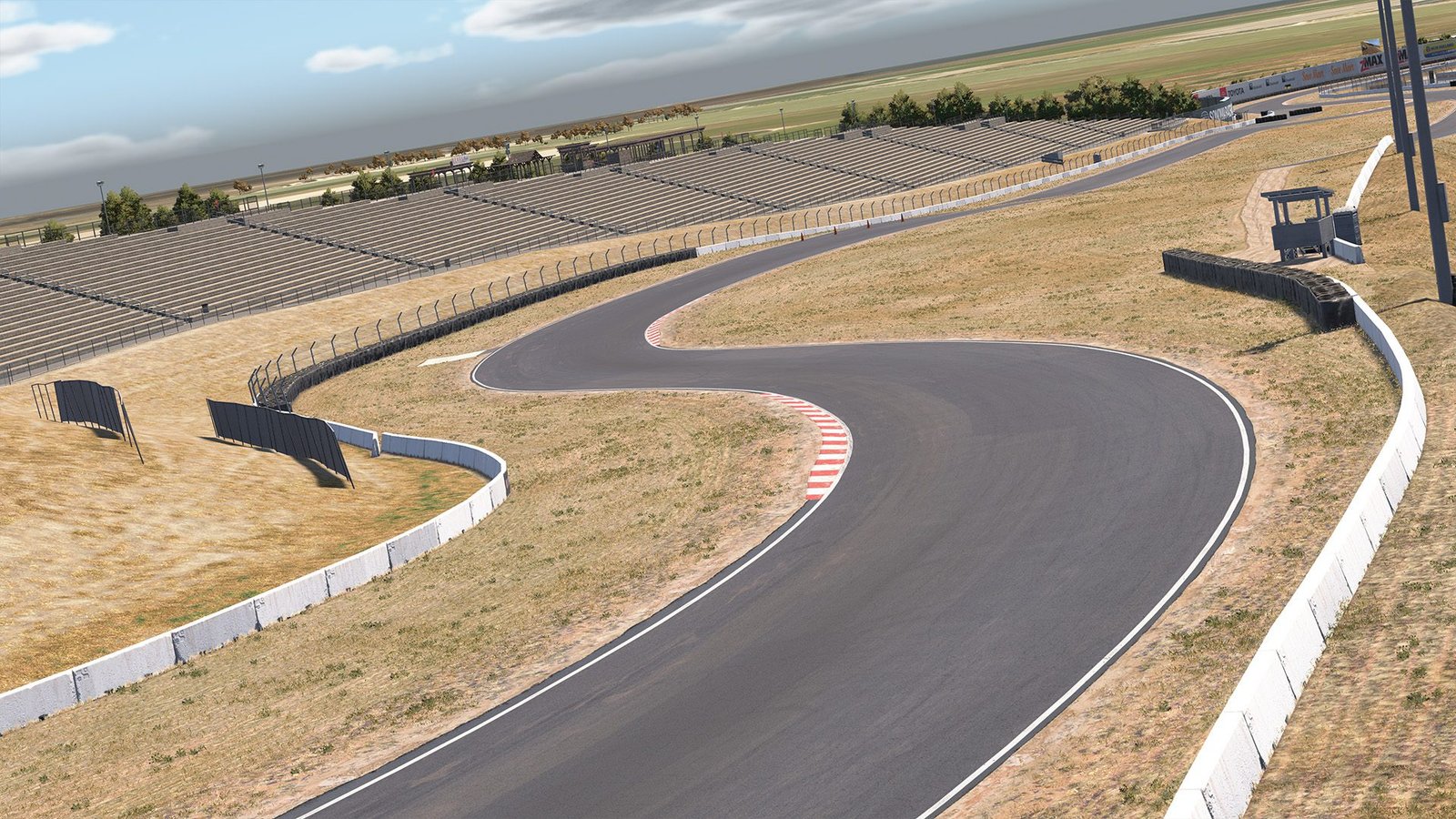
How to Actually Get Better at Road Courses in NASCAR 25
NASCAR 25 road courses beat up players who are perfectly fast on ovals, and the reason is almost never what people think it is. The driving skill gap is real, but the bigger problem is that most players don’t practice road courses the right way, and they’re running a setup that makes the car fight them on every corner entry.
Also see:
▶ Braking, Shifting, and Road Course Technique in NASCAR 25
▶ How to Use Race Weekend Practice to Get Faster in NASCAR 25
▶ How to Find Speed Without Changing the Setup
Fix those two things and road courses go from a survival exercise to one of the most satisfying parts of the game.
Know What You're Up Against
NASCAR 25 has three road courses with different demands. Circuit of the Americas is a mix of medium-speed corners and one hard braking zone at the end of the back straight. Watkins Glen has faster sections and a bus stop chicane that chews up lap times if you get the entry wrong. Chicago Street Course is the tightest and bumpiest of the three, with heavy braking into slow corners and a surface that unsettles the rear under hard braking.
Each one rewards the same fundamentals, but if you're learning a new track, take a test session at that specific circuit before you commit to a race setup.
Setup Changes That Actually Help
An oval setup run on a road course will understeer badly through direction changes and go unstable under hard braking. You don't need a specialized road course setup built from scratch, but a few targeted adjustments make a serious difference.
Move the brake bias forward first. On an oval, most players run the bias toward the rear to generate rotation. On road courses, rear-heavy brake bias causes the back end to step out under hard braking, especially when you're also rotating the wheel. Moving it forward gives you braking stability without sacrificing too much rotation.
Stiffen the springs front and rear compared to your oval baseline. Road courses load the car in lateral directions that ovals don't, and a soft spring setup rolls through corners instead of resisting them. Stiffer springs keep the car flatter and make it more predictable when you're switching from left-handers to right-handers in quick succession.
Even out your tire pressures more than you would on an oval. Road courses heat all four tires instead of primarily the right side, and unbalanced pressures that help on an oval will make the car handle inconsistently through a mix of left and right corners.
If you're running stiffer anti-roll bars on one end for oval stability, back them off or balance them front-to-rear for road courses. The car needs to rotate through multi-directional corners, and a locked-up rear bar fights you when the weight transfers side to side.
Practice the Right Way
The biggest mistake road course players make is going straight into race mode and hoping the laps add up to improvement. They don't. Road courses have too many distinct corners for general repetition to sharpen the specific zones where you're losing time.
Use time trial mode and break the track into sectors. Pick one corner, run through it 10 times in a row, then move to the next one. When you've worked through the whole track corner by corner, string the full lap together. This approach is slower in the short run and much faster over the course of a few sessions than just driving laps and hoping you improve.
Watch replays from the onboard camera. Where you think you're braking and where you're actually braking are often different places. Where you think you're turning in and where the car actually starts rotating are different too. The replay shows you the truth and the sector times tell you which corner is costing you the most.
Do your natural best lap first, before you start attacking specific weaknesses. That lap gives you a reference point. Once you have it, you'll know if your changes are actually helping or just making you think they are.
Push to the limit during practice, including occasionally triggering the corner cut warning. If you're never triggering it, you don't actually know where the limit sits. The penalty tells you exactly where the edge is, and that information is worth more than clean practice laps that leave time on the table.
What Braking Comes Down To
The braking mechanics of road courses are covered in full detail in the technique guide, but the short version for practice purposes is this: commit to your braking point before you reach it. Players who are losing time in the braking zones are almost always hesitating, either braking a little early or a little late on each lap without locking in a consistent marker.
Pick a trackside marker, brake at it, and stick to that marker for an entire run. Push it one marker later when you're hitting it consistently. That process builds real braking confidence faster than trying to feel your way into a later braking point on every lap, which is a habit that produces inconsistent lap times no matter how many sessions you do.
Building Consistent Corner Exits
Road course lap times come mostly from corner exits, not corner entries. A heroic entry that leaves you understeering to the outside of the track costs more than a controlled entry that lets you get on the throttle early and cleanly.
The goal at every corner exit is to be pointed toward the straight before the throttle goes down. At Watkins Glen, most players lose three or more seconds at the bus stop chicane alone by braking too late, running out of room, and crawling through the exit. Brake earlier than instinct says, take the tighter path through the chicane, and let the clean exit onto the back straight do the work.
At Chicago Street Course, the bumps just before the biggest braking zones catch players mid-brake and unsettle the rear. If you're on a controller, turning ABS on for Chicago is a reasonable call. The track surface is rough by design, and ABS limits the worst instability without costing much against realistic competition.
When to Stop Adjusting the Setup
If you're more than two seconds per lap off your best time, the setup is not the problem. Setup changes explain the last few tenths at the limit. They don't explain two seconds. Two seconds is braking points, corner exits, and throttle application.
Lock in your driving process first. Get consistent lap times, even if they're not fast, then start fine-tuning the setup to chase the edges. Chasing setup changes before you've built consistent driving habits is how you end up with 15 different setups saved and no idea which one actually works.
Road courses reward the players who build the discipline to run the same lap over and over before they start experimenting. Once you're consistent, the gap between your current pace and the front of the pack gets a lot easier to read and a lot easier to close.