How to Build a NASCAR 25 Setup From Scratch
Building a NASCAR 25 setup from scratch sounds harder than it is. Most players either leave the default setup alone forever or start spinning sliders randomly and wonder why the car got worse. There’s a better way, and it starts with understanding that “from scratch” doesn’t mean starting from zero.
Also see:
▶ NASCAR 25 Setups: Complete Tuning and Garage Guide
▶ How to Find Speed Without Changing the Setup
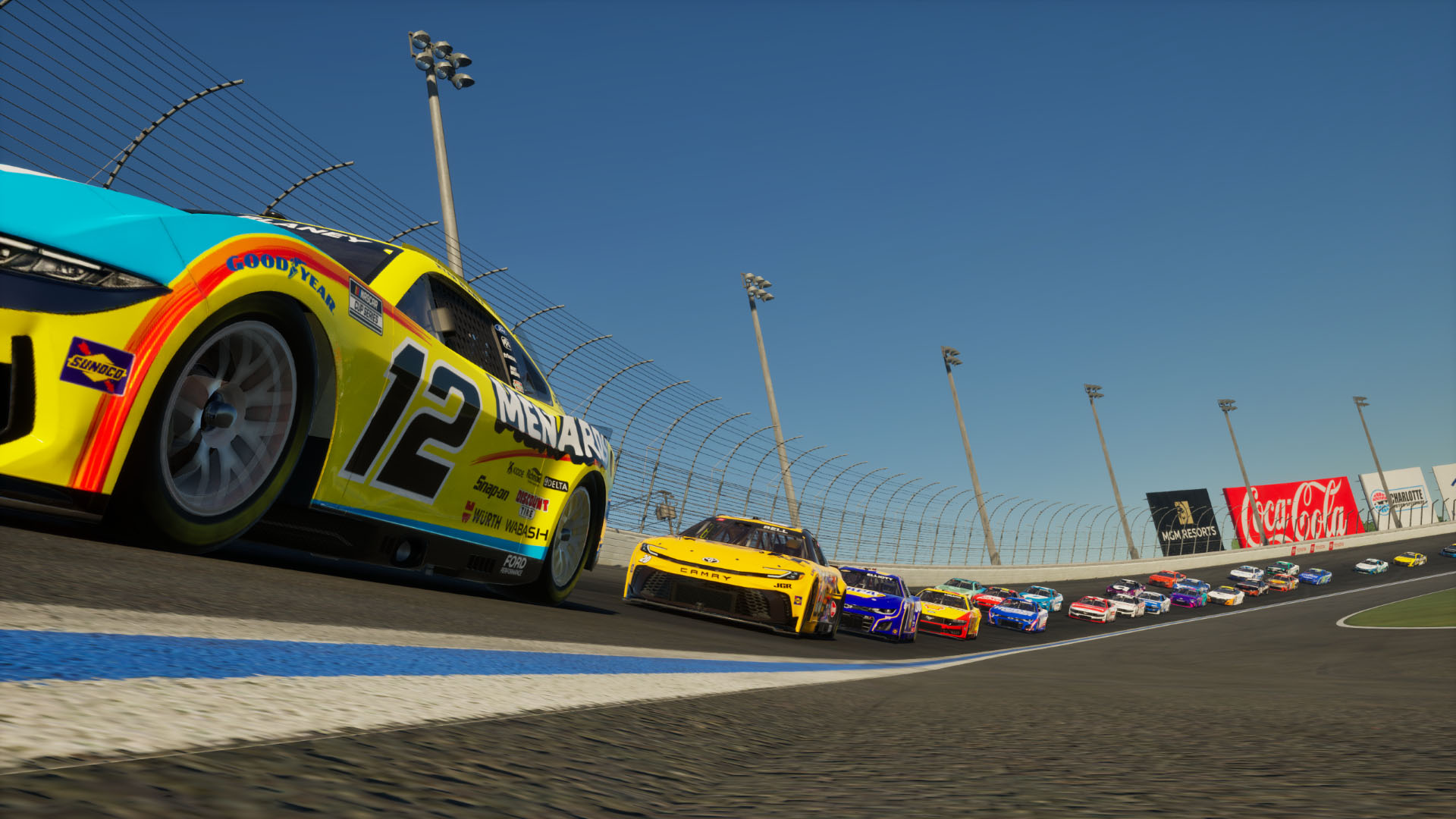
▶ NASCAR 25 Official Screenshots (nascar25.com)
The Default Setup Is Your Foundation
The game ships with a calibrated default for every car at every track. Before you change anything, take that default out for a full practice session. Ten clean laps minimum, with consistent lines. This is not wasted time. It’s your baseline.
What you’re listening for is where the car gives you trouble. Is it pushing through the center of the corner? Getting loose coming off the bottom? Sliding through the exit? Know exactly what the problem is before you open the garage. If you don’t have a clear diagnosis, you can’t write a clear prescription.
If you skip this step and start adjusting blind, you’ll end up chasing your own changes. The car might get better, but you won’t know why, and you won’t be able to fix it when the balance shifts again during the race.
Aero Balance First
The most common mistake in a NASCAR 25 setup build is adjusting suspension before aero. Aero balance controls how much of the car’s grip comes from the front versus the rear. Get the aero wrong and no amount of spring tuning will fix it.
Start with the splitter and spoiler. A lower splitter generally adds front grip. A larger spoiler adds rear stability. If the car is tight everywhere, push more aero balance toward the rear. If it’s loose everywhere, go the other direction.
One change at a time is the rule. One click on the splitter, five laps, evaluate. This sounds slow, but it’s faster than making three changes and having no idea which one helped.
Suspension: The Second Layer
Once the aero balance feels roughly right, move to the springs. Spring rates affect how the car loads the tires through a corner. Stiffer front springs generally tighten the car on entry. Stiffer rear springs can loosen it on exit.
The car transfers weight load during braking, cornering, and acceleration. A car that’s tight on entry and loose on exit has two separate problems, not one. Tight on entry means the front isn’t gripping well under braking. Loose on exit means the rear is stepping out under power.
For entry tightness, try softening the front spring a click or raising the front of the car slightly. For exit looseness, try stiffening the rear spring or lowering the rear. You’re looking for a car that feels balanced through the whole corner, not just one phase of it.
Track Bar: Setting the Rear Height
The track bar controls the rear roll center of the car. In NASCAR 25, it has a significant effect on how the car feels at different points on the track, and it’s one of the more sensitive adjustments in the garage.
Raising the track bar typically tightens the car on corner exit. Lowering it tends to loosen the car on entry. Move it one click, run five laps, and evaluate before moving again. Small changes here have an outsized effect on balance.
Don’t confuse track bar work with spring work. Springs affect how much the body moves. The track bar affects where the body moves to. They interact, but they’re solving different problems. If you’re chasing tightness with both at the same time, you’ll lose track of which fix is doing what.
Gear Ratios: Set Them Last
Gear ratios are the last adjustment once the balance is sorted. You want to reach the rev limiter at the fastest point of the track, usually the end of the longest straightaway.
On short tracks, use a taller final gear to keep acceleration strong through multiple tight corners. On superspeedways, tune for top-end speed. If you’re not quite touching the limiter at the end of the straight, you’re leaving speed on the table. If you hit it halfway down, you’re out of gear too early.
Don’t use gearing to fix a balance problem. If the car is loose off the corners, that’s a setup issue. Gearing affects where you make power, not how the car handles through turns.
Track Type Differences
A setup built for Charlotte does not translate to Talladega, and neither works at Bristol. Different track types prioritize different areas of the garage.
On intermediate ovals, aero balance and tire management dominate. On short tracks, mechanical grip matters more because there’s not enough sustained speed for aero to do as much work. On superspeedways, you’re barely touching the setup because the draft handles most of the balance work for you. On road courses, the thinking shifts entirely: braking stability, corner entry speed, and traction on exit become the priority adjustments.
When building a NASCAR 25 setup from scratch at a new track type, start with the default, identify the single biggest issue, and make one targeted fix before branching out into secondary adjustments. Trying to solve multiple track-type problems at once is how you end up with a car that’s not quite right anywhere.
How to Test Without Wasting Laps
Every adjustment needs a proper test. That means at least five clean laps after the tires come up to temperature. Cold tires will tell you nothing useful about the car’s balance. Let them come in, get consistent lap times, and then evaluate.
If you can’t tell whether the change helped after five laps, the change probably didn’t matter much. That’s useful information too, because it tells you to move on to a different adjustment.
On tracks with significant tire falloff, run longer stints. A setup that feels good for five laps but falls off hard after fifteen is not a race setup. You’re building for the full run, not the first green flag lap.
Build vs. Borrow
Not every race weekend needs a setup built from scratch. Community setups are a useful shortcut, and there’s nothing wrong with using one as a starting point, as long as you understand what it’s doing and why.
Where community setups fall short is at tracks that aren’t covered yet, tracks where conditions differ from when the setup was made, or car classes with fewer players sharing data. In those cases, building from scratch is your only real option.
The other reason to build your own is that a setup you built yourself is a setup you understand. If the car goes tight in traffic late in a run, you’ll know which knob to reach for. A setup you copied from somewhere might feel great in practice and leave you lost when something changes mid-race.
When to Stop Building
You don’t need a perfect setup. You need a drivable one, and that’s a lower bar than most people think.
A car that’s slightly tight is generally easier to manage than a loose one. A loose car will bite you without warning. A tight car gives you feedback and lets you work with it. If you’re stuck between two setups, take the tighter one and carry more momentum through the center of the corner.
Building a NASCAR 25 setup from scratch gets easier every time you do it. The first few sessions will be slow, and you’ll make changes that make the car worse. That’s normal. Over time, you’ll start feeling what the car is telling you before you open the garage, and that’s when the real speed starts showing up.